
It was just a warm afternoon on the river.
With thoughts of school far behind him, Eleven-year-old Max was enjoying another summer afternoon casting the current, waiting for a bite. Then, on one well-placed cast, came a solid strike. The rod bent and the drag whined, and what started as a casual outing quickly turned into a determined fight with a strong bass.
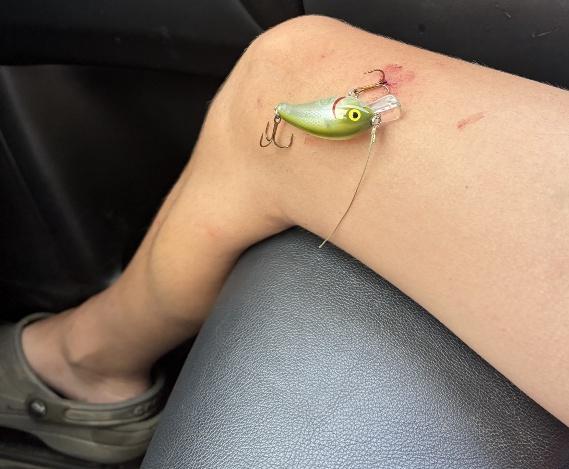
After working the 21-inch fish to shore, Max knelt down in his shorts to unhook it, pressing it against his leg to keep it still. In one powerful flop, everything changed.
Two hooks remained in the fish. The third drove deep past the barb into Max’s thigh, instantly connecting him to the fish. What began as a simple afternoon of fishing ended with a trip to Bucktail Medical Center’s Emergency Department for minor surgery and a lesson about how quickly things can go wrong.
Aimee Neiswender, Chief Nursing Officer at Bucktail Medical Center, reports that our emergency department sees numerous fishing or water-related injuries each year, ranging from minor scrapes and cuts to more serious cold-water exposure injuries. While fishing isn’t often thought of as a “dangerous” activity, the rivers and streams of north central Pennsylvania can offer beautiful, but unpredictable conditions that every angler should respect.
As anglers prepare for the upcoming trout-season opener, here are some key safety considerations to help ensure the only stories you bring home are about “the one that got away.”
Slips, Trips, and Falls
Stream banks are naturally uneven and often covered in wet rocks, moss, and mud. A single misstep can result in sprains, strains, or bone fractures.
- Wear sturdy, non-slip boots or waders designed for wet terrain.
- Take your time when navigating slippery areas.
- Carry a phone, and if you know you’ll be out of cell range. Consider a two-way radio, satellite communicator such as a Garmin inReach.
Cold Water and Hypothermia
Even on warm spring days, water temperatures in local streams like Kettle Creek remain in the mid-40’s°F well into April. Prolonged exposure can lead to hypothermia, a serious condition where your body loses heat faster than it can produce.
- Dress in layers; consider a thermal base-layer.
- Avoid deep water when alone and never wade without a partner.
- If you use chest waders, remember they can fill with water if you slip and fall, greatly increasing your risk of drowning. As an emergency backup, consider carrying a knife in accessible location to cut yourself free from your waders if you become trapped.
Tackle Safety
Max’s story is a perfect illustration of how quickly even a minor moment can turn into a painful memory.
- When releasing fish from the hook, consider using pliers and/or anti-slip gloves.
- Consider using barbless hooks or crimping barbs which are easier to remove and less likely to cause serious injury (just keep your line tight so you don’t lose your fish!).
- Always carry a small first aid kit with tweezers, pliers, antiseptic wipes, and bandages.
- If a hook becomes embedded in your skin, don’t try to remove it yourself if it’s deep or near sensitive areas. Seek medical care promptly.
Wildlife
As the weather warms, wildlife becomes more active. Snakes, black bears, and ticks are all part of the north central Pennsylvania outdoors
- Snakes may be warming on rocks or logs. While most snakes in northern PA are harmless, rattlesnakes are venomous, and a bite can be lethal.
- Black bears are curious and may be drawn to food or bait. If you encounter a bear, especially with cubs, give it plenty of space and leave the area.
- Ticks are small but carry diseases like Lyme. Check yourself after being in tall grass or brush.
Your Safety is Part of the Adventure
Fishing is one of the great joys of living in this area. Whether you’re pursuing that trophy trout or just sharing a quiet morning on the water with family and friends, a few extra precautions can reduce your risk of injury and focus on what matters most: the experience.
If you need medical care after a water or fishing-related injury, Bucktail Medical Center’s Emergency Department is open 24 hours a day, 7 days a week, staffed by experienced physicians and nurses ready to care for anglers of all ages. We’re here to help you get back to what you love.